
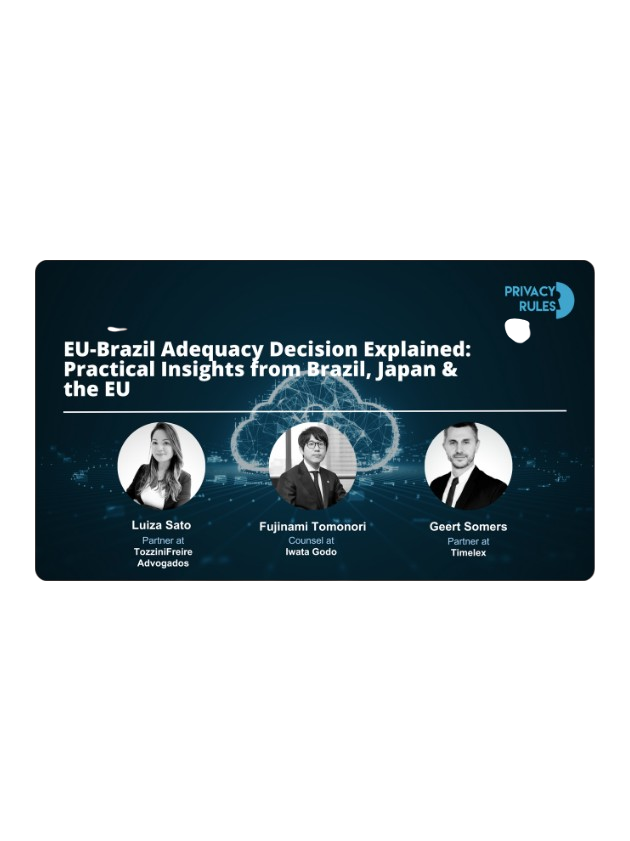
The EU-Brazil mutual #adequacy decision marks a significant milestone in international #dataprotection, but what does it actually mean for organizations transferring #data across borders?
We brought together three leading experts from our global network to break down the practical implications, lessons learned, and critical compliance considerations that #legal and #privacy teams need to understand.
We would like to sincerely thank our speakers Luiza Sato, Partner at TozziniFreire Advogados (Brazil), Tomonori Fujinami, Counsel at Iwata Godo (Japan), and Geert Somers, Partner at Timelex (Belgium), for their sharp insights and real-world perspectives on navigating this new adequacy landscape.
Key takeaways:
✅ Adequacy eliminates the need for additional transfer mechanisms, such as #SCCs, between Brazil and the EU, but it doesn’t eliminate governance responsibilities
✅ Effective enforcement and continuous dialogue with the European Commission are essential for maintaining adequacy status long-term
✅ Organizations must stay vigilant about onward transfers to non-adequate countries and ensure all core #GDPR/#LGPD principles still apply
✅ Japan’s experience shows that adequacy is not a “set it and forget it” achievement, it requires ongoing legislative evolution and regulatory commitment
For organizations operating globally, adequacy simplifies transfers, but it also demands sustained compliance maturity, monitoring, and accountability. As cross-border data flows continue to underpin digital business models, understanding the long-term implications of adequacy decisions will remain essential.